3D Cataloging vs Traditional Cataloging
How you represent products decides how quickly customers trust, explore, and buy them. Here’s a clear comparison between flat, traditional catalogs and immersive 3D cataloging.

Traditional catalogs were designed for print: a few angles, fixed layouts, and static descriptions. Online buyers, however, expect to inspect products as if they are holding them in their hands. That’s where 3D cataloging changes everything.
3D cataloging doesn’t just replace photos; it turns every product into an interactive digital asset that can be reused across marketplaces, websites, apps, and AR/VR experiences.
1. Visual Experience
Traditional Cataloging
-
2D photos shot from a few fixed angles.
-
No interaction — users can only scroll and zoom the page.
-
Depth, real scale, and texture are hard to judge.
3D Cataloging
-
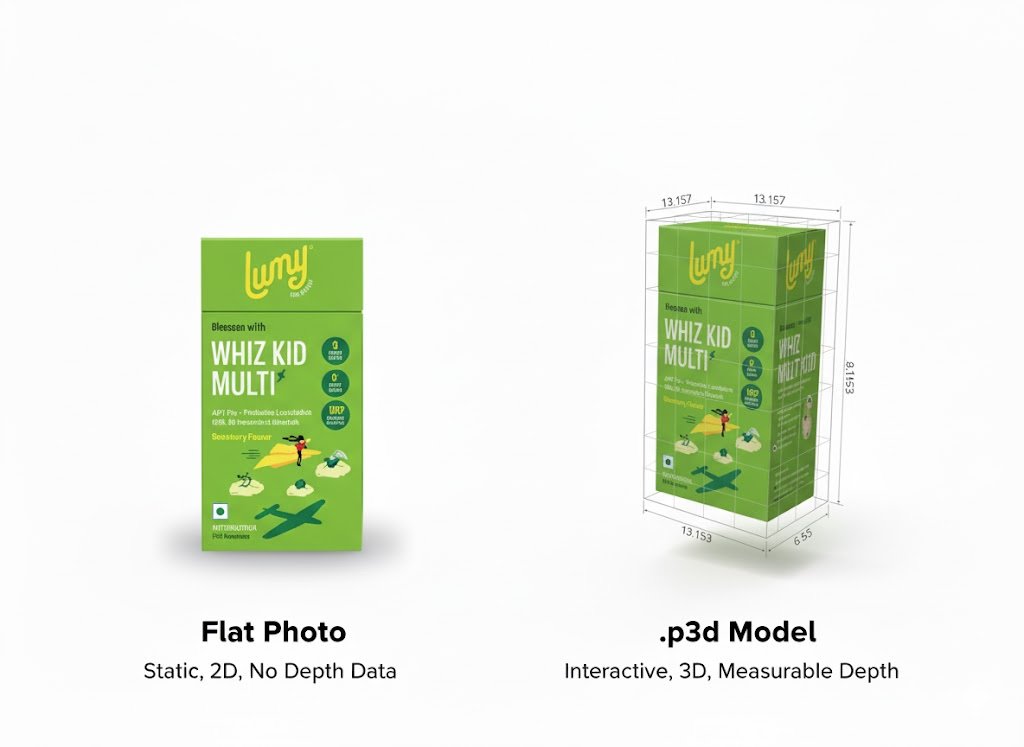
360° and multi-angle views from a single 3D capture.
-
Customers can rotate, pan, and zoom without losing clarity.
-
True-to-life representation of shape, proportions, and surfaces.
2. Product Accuracy & Information Depth
The richer and clearer your product information, the fewer doubts and returns you deal with.
-
Traditional: Basic photos, short descriptions and limited specification fields. A lot of decisions are left to the buyer’s imagination.
-
3D Cataloging: Depth, scale, and geometry combined with enriched attributes — dimensions, materials, surface details, compliance tags, and even barcode/QR information.
-
Impact: Fewer surprises after delivery and fewer “product not as expected” complaints.
3. Customer Engagement & Conversion
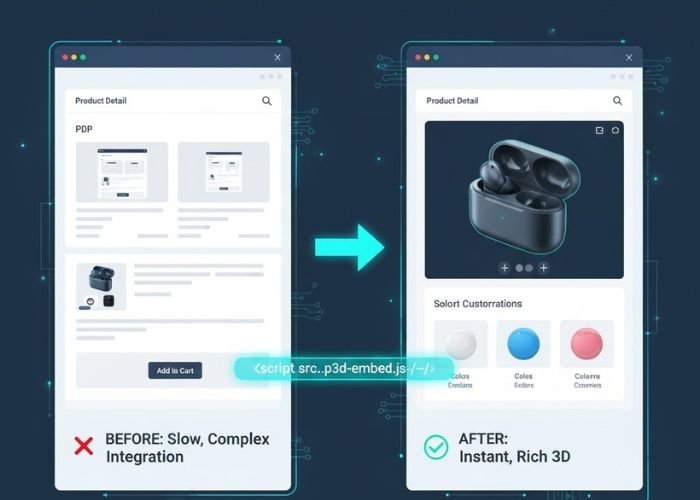
Traditional catalogs create a passive experience — users just scroll. 3D cataloging turns the PDP into an interactive exploration.
-
Traditional: Skim through 3–4 static images and move on quickly.
-
3D Cataloging: Rotate, zoom and inspect from different angles. Each interaction is a micro-moment of engagement that builds trust and nudges users towards “Add to Cart”.
4. Content Creation, Scale & Cost
How easy is it to maintain and grow your catalog?
Traditional
-
Separate shoots for each angle and each variant.
-
Heavy manual editing (cropping, cleanup, retouching).
-
Reshoots are needed for packaging updates or new channels.
3D Cataloging
-
One scan → all angles, 360 spins, WBG images, lifestyle compositions and videos.
-
Easy to scale to tens of thousands of SKUs without re-shooting.
-
Long-term cost per SKU drops sharply as assets are reused across channels.
5. Channel Readiness & Omnichannel Commerce
A modern catalog has to serve marketplaces, D2C sites, B2B portals, PDFs and sales decks — all at once.
-
Traditional: Each channel’s specs are handled manually — resize this image, crop that banner, rewrite titles again and again.
-
3D Cataloging: Once the product is captured in 3D, derivatives can be auto-generated into channel-ready formats (images, 360 iframes, videos, feeds, XML/CSV) mapped to Amazon, ONDC, Shopify and more.
6. Future-Readiness: AR, VR & AI
2D photos were built for screens. 3D assets are built for everything beyond screens.
-
Traditional: Works for basic PDPs and static PDFs, but does not plug smoothly into AR try-ons, VR showrooms, or immersive experiences.
-
3D Cataloging: The same 3D asset can power mobile AR, virtual stores, digital twins, training simulations and AI-driven visual search.
7. Quick Side-by-Side Comparison
-
Visual Format: Traditional — 2D photos. | 3D Cataloging — interactive 3D, 360°, depth-aware representation.
-
Angles & Detail: Traditional — limited, manually chosen angles. | 3D Cataloging — all angles captured from one scan with smooth rotation and zoom.
-
Engagement: Traditional — scroll and zoom only. | 3D Cataloging — rotate, zoom and inspect from any side, leading to higher time on page.
-
Reshoots & Updates: Traditional — frequent reshoots when packaging or channels change. | 3D Cataloging — same 3D asset reused, only derivatives are updated.
-
Omnichannel Readiness: Traditional — manual formatting for each marketplace. | 3D Cataloging — auto-generated images, videos and feeds mapped to each platform.
-
Future Tech: Traditional — not compatible with immersive experiences. | 3D Cataloging — natively ready for AR try-ons, VR showrooms and AI visual search.
Ready to move from flat catalogs to living 3D assets?
Start building a 3D-first catalog that works across marketplaces, PDPs, demos and immersive experiences — all from the same core asset.
Conclusion
Traditional cataloging shows your product. 3D cataloging brings it to life. It delivers richer visuals, better product understanding, higher engagement and assets that are ready for the next decade of commerce — from marketplaces and apps to AR, VR and AI.
If you are serious about scaling online, standardizing content across channels and building future-proof product experiences, moving from traditional to 3D cataloging is not just an upgrade — it’s a strategic shift.
Leave a Comment
Your email address will not be published. Required fields are marked *